Most governments do have a technology problem.
Legacy platforms, integration debt, and fragmented data are real constraints.
But when transformation stalls, it’s usually not because the answer is unclear — it’s because the system can’t deliver end-to-end across silos, with trust (SPRITE) engineered in from day one.
Not because public servants aren’t smart or committed. But because we’ve built a workforce model that rewards vertical depth inside a silo, while the work now demands horizontal, system-level delivery across silos.
That’s the gap between Government 2.0 and Government 3.0.
Government 2.0 is where many jurisdictions live today: lots of digitisation, lots of portals, lots of “projects”… and still a fragmented user experience. Different logins for different services. Different datasets for the same person. Different rules, queues, call centres, and handoffs depending on which part of government you happened to enter through.
Government 3.0 is connected government: services that wrap around people and life events (not org charts), work end-to-end, and are trustworthy by design — available when and where people need them, including in moments of vulnerability.
And it’s also the foundation for Government 4.0 — where services become intelligent, automated, and proactive.
Some elements of this are already arriving. But true “Government 4.0 at scale” is further away for most jurisdictions — and if you skip connected Government 3.0, you don’t get “intelligent government”; you get intelligent silos.
In other words: you don’t get safe automation at scale without first getting connection, data, identity, and trust right.
Where AI fits (and where it doesn’t)
AI makes it easier for practitioners to “reach sideways” — to learn fast across unfamiliar domains and move from question to options quickly.
But AI doesn’t remove the need for fundamentals. Yes, AI can help practitioners draft, analyse, simulate scenarios, test options, automate routine steps, and surface patterns in data — not just produce content. But in government, the hard part is still making good decisions across constraints, joining up delivery across silos, and maintaining trust.
That’s why the FGX Practitioner Capability Framework is tool-agnostic. Regardless of which AI tools a team uses, modern practitioners still need to understand (and be able to evidence) capabilities like:
- Digital Ambition & Strategy
- Outcomes-Based Portfolio Management
- Service Design & Orchestration
- Analytics & Decision Science
- Transparency & Accountability
- Privacy & Data Protection
- AI & Automation Assurance
- Communication & Storytelling
- Collaboration & Stakeholder Management
AI can accelerate these capabilities — but it can’t replace them. This is a fundamental change in thinking and ways of working required to create system-level change.
And the hard truth is: you don’t get there by buying a platform.
You get there by building a new kind of practitioner — and enabling them with an operating model that makes good delivery repeatable.
The missing archetype: “T-shaped” professionals for Government 3.0
So what kind of practitioner actually delivers this?
In modern organisations, there’s an old but increasingly relevant idea: the T-shaped practitioner.
The vertical stroke of the “T” is deep expertise (policy, cyber, service design, data, procurement, finance, frontline operations). The horizontal stroke is the ability to collaborate across disciplines, understand how the system fits together, and deliver outcomes end-to-end.
This “T-shaped” idea has been used across industries for years because it matches reality: complex problems don’t respect functional boundaries. And neither do users. The person trying to register a birth, start a business, claim support, report a hazard, or renew a licence doesn’t care which department owns which sub-process. They care that it works.
Even in the private sector, the argument is now explicit: universal skills plus a deeper “spike” of expertise is the practical profile for modern capability building.
But here’s where government is different.
In government, the horizontal stroke can’t just be “communication and teamwork”.
It has to include trust, legitimacy, policy constraints, operational delivery, and the reality of serving everyone — and most importantly people who are vulnerable, offline, or distrustful of government.
And that’s why we built a practitioner framework specifically for Government 3.0 delivery.
Why “horizontal” capability is now the bottleneck
Across the world, we’re seeing the same pattern:
Strategy teams can describe the destination (connected services, digital public infrastructure, AI-enabled operations).
Delivery teams can run projects.
But the system struggles to coordinate across funding, governance, procurement, data sharing, identity, and trust constraints — so the “connected vision” never becomes day-to-day practice.
In other words: ambition outpaces capability.
This comes through constantly when leaders talk candidly about why transformation stalls: regulatory settings, procurement and funding models, and organisational structures that don’t support modern, iterative delivery.
So the question becomes practical:
What does “capability” actually mean, at the practitioner level, if the job is to deliver connected government?
The FGX Practitioner Capability Framework (20 capabilities, 5 levels)
At the Future Government Institute, we’ve codified a practitioner capability framework to answer that question — and to make it usable for real teams.
It’s built around:
- 20 capabilities (applied to every practitioner, regardless of role)
- 5 proficiency levels (G0 to G4)
- three pillars: Leadership, Human Experience, and Trust (SPRITE)
- plus cross-cutting professional capabilities that make the system work in practice
This isn’t theory. It’s designed to help practitioners do three things that Government 2.0 struggles to do consistently:
Lead and govern for outcomes (not activity)
Design end-to-end human experiences (not channel upgrades)
Engineer trust up front (not after something breaks)
And because capability only matters if it can be assessed and developed, the framework uses concrete descriptors at each level — from limited awareness through to expert, system-wide practice.
What “Trust (SPRITE)” means in delivery terms
Most capability frameworks treat trust like a policy or comms issue.
We treat it as a delivery requirement.
SPRITE is our shorthand for the trust architecture that needs to be deliberately designed into connected government:
Security, Privacy, Resilience, Inclusion, Transparency, Ethics.
Why? Because Government 3.0 increases the “surface area” of government: more data sharing, more interoperability, more automation, more dependency on platforms. That can create enormous public value — but only if trust is engineered, not assumed.
And this is where capability matters. You can’t delegate trust to a single “risk team” at the end. Every practitioner making product, policy, procurement, data, and operational decisions needs the horizontal ability to spot trust failure modes early, and design them out.
The practical benefit: a common language across silos
A subtle but important benefit of a shared capability model is that it gives government a common language across functions.
A service designer can talk to privacy, risk, and legal.
A procurement practitioner can talk to product and delivery.
A policy practitioner can understand what makes something “achievable” in delivery terms.
A cyber specialist can drive resilience without creating security theatre.
That’s what the horizontal stroke of the “T” really is: not generalism, but interoperability of thinking.
So what’s the call to action?
If you’re a senior leader: ask whether your workforce model is built for Government 2.0 or Government 3.0.
If you’re a practitioner: ask whether your career development is building vertical depth only — or building the horizontal capabilities that let you deliver outcomes across the system.
And if you’re trying to move from “we have a vision” to “we can actually execute”: start treating capability as infrastructure.
Because transformation doesn’t fail due to lack of ideas. It fails because the system can’t reproduce good practice at scale.
That’s the work.
And we’re not guessing at what “good” looks like — it’s visible in real-world patterns across the Knowledge Library:
- Countries that get identity and trust right at scale make it easier to join services up (e.g. national digital identity and single sign-on platforms).
- The best transformations invest in multidisciplinary, user-centred delivery capability inside government (not just vendors) — and can point to measurable improvements in user outcomes (for example, digital service teams that can demonstrate clear satisfaction and uptake gains on critical services).
- The jurisdictions moving fastest toward Government 3.0 are building common platforms (identity, data exchange, APIs) so teams can ship end-to-end experiences without re-litigating foundations every time.
We built the FGX Practitioner Capability Framework (and the broader Knowledge Library of case studies, playbooks, and exemplars) so governments can stop guessing — and start building measurable practitioner capability towards connected, trusted Government 3.0 delivery.
If you want access to the framework, benchmarks, and the supporting global body of practice, that’s what our memberships are for.


Help your peers
Share what you've learned with fellow public servants
Recommendations

Public Sector Procurement in 2026
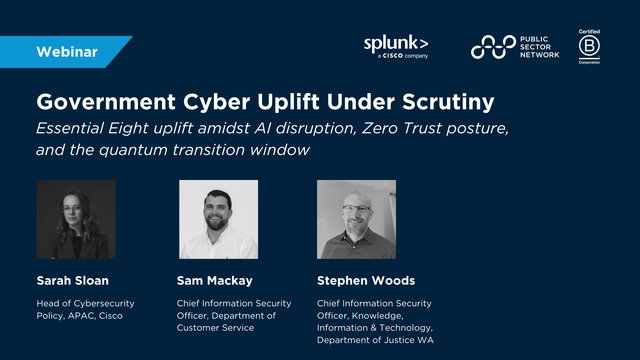
Government Cyber Uplift Under Scrutiny: Essential Eight uplift amidst AI disruption, Zero Trust posture, and the quantum transition window
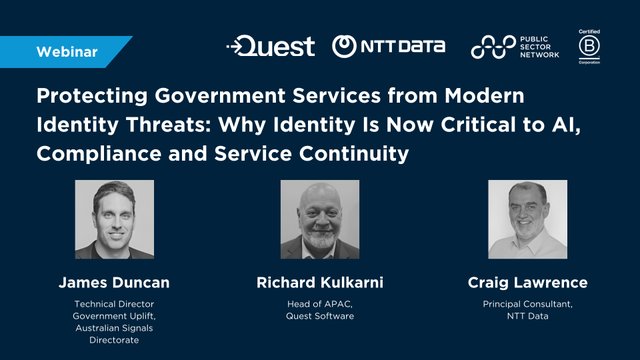
Protecting Government Services from Modern Identity Threats: Why Identity Is Now Critical to AI, Compliance and Service Continuity

Google- Workforce transformation through IT training
6 Mistakes Tech Vendors Make When Selling to Hospitals