Michael Sandor, Director Digital Government Services, South Carolina Department of Administration
Overview
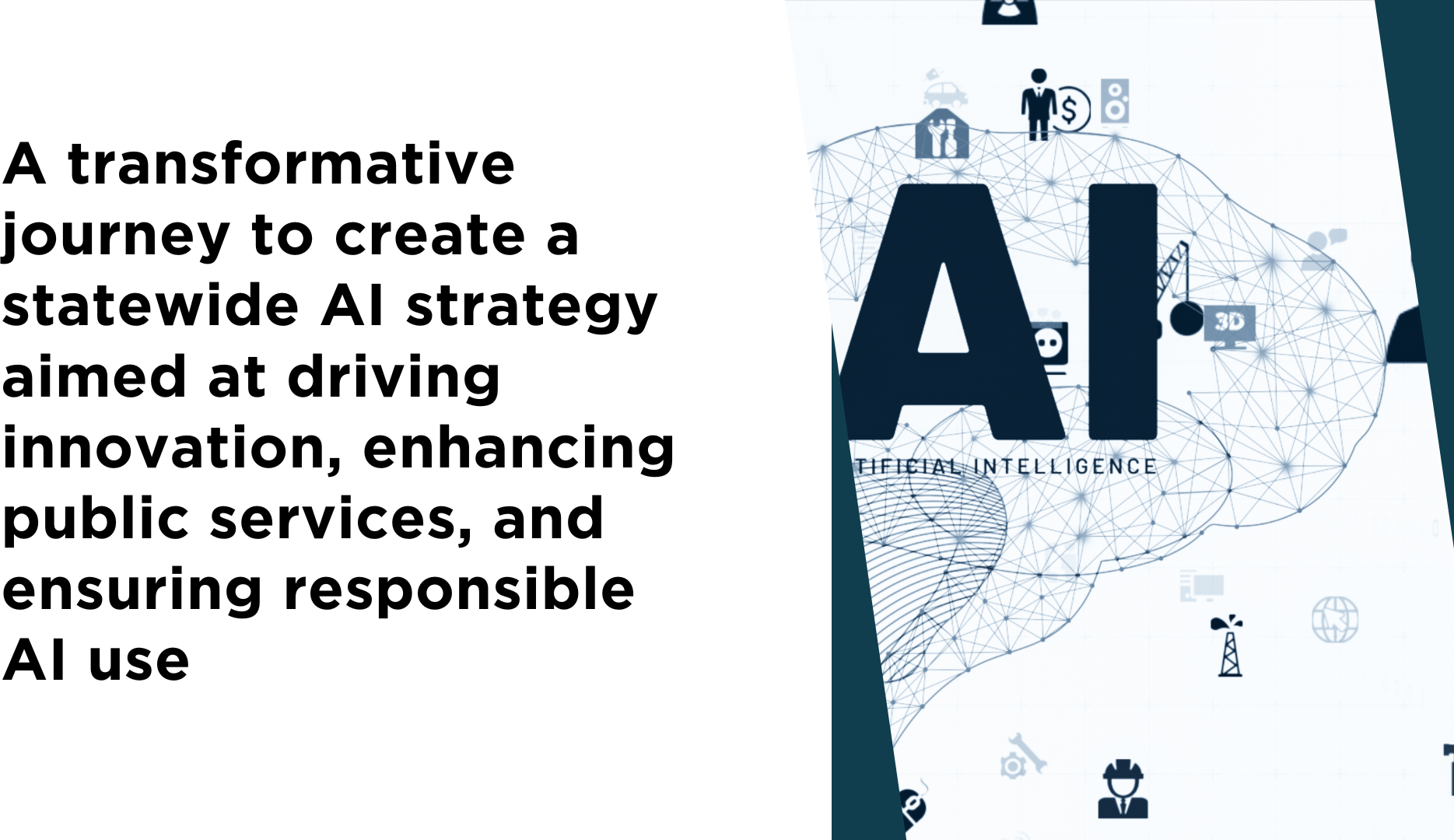
South Carolina’s Department of Administration embarked on a transformative journey to create a statewide AI strategy aimed at driving innovation, enhancing public services, and ensuring responsible AI use. The initiative focuses on building a collaborative framework that balances AI opportunities and risks while addressing the diverse needs of over 80 state agencies.
Objective
The primary goal was to develop a unified AI strategy that:
- Promotes responsible AI use across state agencies
- Fosters collaboration among stakeholders, ensuring all voices are heard
- Navigates legal and policy challenges associated with AI adoption
Solutions Implemented
Collaborative Strategy Development
- Involved representatives from 80+ state agencies, ensuring diverse stakeholder input.
- Partnered with third-party consultants to incorporate industry best practices.
- Published the Statewide AI Strategy in June 2024, reflecting a shared vision for AI use across South Carolina.
Three-Pillar Framework: Promote, Pursue, Protect
- Promote: Encourage responsible AI adoption while maximising opportunities, including workforce development.
- Pursue: Drive innovative solutions by exploring emerging AI applications.
- Protect: Prioritise data security, privacy, and ethical use of AI technologies.
Stakeholder Engagement and Communication
- Created a transparent engagement process involving long meetings, detailed minutes, and iterative feedback loops.
- Maintained open communication channels to ensure all stakeholders were informed and involved in decision-making.
Challenges Addressed
Lack of Direct Citizen Feedback
- The Department of Administration does not interact directly with citizens but serves other state agencies.
- Addressed this by gathering insights from legislators, community members, and industry experts to shape AI policies that reflect citizen needs.
Legal and Policy Uncertainty
- Outdated legal frameworks posed challenges for AI contracts, data privacy, and accountability.
- Developed Acceptable Use Policies (AUPs) tailored to AI’s unique challenges, ensuring compliance and security.
Diverse Stakeholder Needs
- Aligning the expectations of 80+ state agencies with varied priorities and readiness levels.
- Fostered collaboration by creating a unified vision and flexible strategy that accommodates different use cases and adoption rates.
Impact
Unified Statewide AI Vision
- 80+ agencies aligned under a common AI strategy, promoting consistency in AI implementation across South Carolina.
- Established a shared framework for responsible AI use, balancing innovation and risk management.
Increased Collaboration and Buy-In
- Enhanced stakeholder engagement led to greater support and understanding of AI’s potential and challenges.
- Created a culture of collaboration and shared responsibility among agencies, ensuring sustainable AI integration.
Pioneering Responsible AI Use
- Positioned South Carolina as a leader in public sector AI adoption, setting a benchmark for other states.
- Ensured ethical, transparent, and secure AI implementation, maintaining public trust and regulatory compliance.
Philosophy of AI Strategy
South Carolina’s AI strategy is built on a foundation of collaboration, inclusivity, and responsibility. By involving all stakeholders in the design and decision-making processes, the state ensures that the AI framework is adaptive, transparent, and aligned with public values. The Promote, Pursue, Protect framework balances innovation with security and ethical standards, securing a sustainable, future-ready AI ecosystem for South Carolina’s public services.
Key Takeaways
- Collaborative strategy development ensures diverse stakeholder input and shared ownership.
- Three-pillar framework balances innovation opportunities with security and ethical responsibilities.
- Transparent communication and engagement build trust, buy-in, and a culture of collaboration.
This case study demonstrates how South Carolina’s strategic approach to AI serves as a model for responsible, inclusive, and innovative public sector transformation.







Help your peers
Share what you've learned with fellow public servants