It’s estimated that by 2025, 75% of data will be processed outside the traditional data centre or cloud.
New and exciting methods of computing have emerged, decentralising data processing to the ‘edge’ of the network.
But wait – what exactly is the edge? And what is edge computing ?
Already feel clueless? Don’t worry, you’re not alone. A few short months ago, this term was new and scary to me. Between reading about cloud and hybrid computing, IoT and data centres, I couldn’t get a grip on what exactly edge computing was.
Turns out, the concept is pretty simple! And it’s definitely more common than you’d think. In fact, edge computing probably already offers a tonne of common-sensical solutions in your everyday life.
Read on to discover the top benefits of edge computing , and some real-world examples of how it’s already transforming a range of industries. Trust me – you’re probably already an expert!
Edge Computing: A simple(ish) equation
Edge + Computing
is
technologies at ‘the edge’ of the network + processing data
more simply
a range of mobile, cloud or physical infrastructure + distributing data among themselves
more specifically
interoperable sensors, satellites, mobiles, cars, etc + collecting and processing data to deliver real-time analytics
(Okay, maybe it’s not that simple.)
Say what ?
Essentially, edge computing allows for raw data to be processed closer to the point of collection through edge-based technologies. These sensors, satellites, mobiles and more work together with the IoT, cloud and data centres to:
- Reduce latency – surpassing the ‘last mile’ bottleneck in which data must be routed through local network connections before reaching its final destination
- Increase data security – decentralising data processing and storage, significantly reducing the impacts of a distributed denial of service (DDoS) attacks or power outages
- Provide real-time insights – computing data closer to the end user to increase bandwidth availability and tackle periodic surges, seasonality or unpredictability
- Enhance existing networks – the scalability and versatility of edge computing means you can incorporate edge-based tech to enhance processes without overhauling your entire IT infrastructure
Still confused? Here are five applications of edge computing you might already know and love!
Edge computing is right under your nose!
1. Streaming services
Netflix and chill? How about Netflix and cache?
14.5 million Australians now have access to content streaming services – that means 14.5 million Australians use edge computing to binge on their favourite tv and movies.
As I mentioned, edge computing decentralizes computing by distributing data processing closer to the end-user. Online streaming services like Netflix, Stan, Disney+, Amazon Prime and Foxtel On Demand use a process called e dge caching where video content is saved locally to the cache in an edge server. This means online content can load quickly and won’t buffer half-way through a particularly dramatic scene.
Next time you’re binging on Bridgerton , remember that the edge made it possible!
2. Phones and 5G
Unfortunately, I still have to sit in a very particular spot in my backyard to get mobile coverage. But hopefully the federal government’s Mobile Black Spot Program will soon sort me out!
For most Aussies, such black spots are few and far between thanks to 5G. 5G doesn’t only keep us connected with faster and more reliable internet, but can also link with smart systems (think heaters, alarms, fridges, watches) to gain real-time insights into usage and predict demand. This (surprise, surprise) is a form of edge computing!
Rather than having to send data back to a centralized server (whether it be cloud or a data centre), overlapping 5G networks keeps data on the edge. By using edge-based tech, transmitted data bypasses the painfully slow ‘last mile’ bottleneck, which is usually a series of sub-optimal connections that come just before end-users. This last mile can add between 10-65 milliseconds – but combining 5G networks with the edge reduces latency to just 1 millisecond ! That’s 9-64 milliseconds closer to getting your pizza delivered.
3. Self-driving cars
Wow. We really do be living in 2K21.
Although it feels like an episode of The Jetsons , autonomous vehicles (or ‘connected vehicles’) are a very real element of future mobility. Usually, electric cars collect data from a bunch of sensors (in and out of the vehicle) and transfer said data to the cloud for processing.
With edge computing, the volume of data sent to the magical world of cloud can be limited, meaning that most of the data is processed and analysed on the ground. This reduces data transmission costs and stops sensitive data from leaving the vehicle, which can be a game-changer for sensitive operations.
Edge computing can also help maintain these (often very expensive ) vehicles by providing battery monitoring, predictive maintenance, smart traffic and fleet management. In fact, the Automative Edge Computing Consortium (AECC) was established in 2019 to drive the evolution of edge computing infrastructure to support big car data in a “connected-vehicle future”.
@ Elton Musk – eat your heart out.
4. Farming
Okay, yes. Maybe I’m getting a little niche here. BUT edge is essential to making the agriculture sector smarter, especially when paired with IoT.
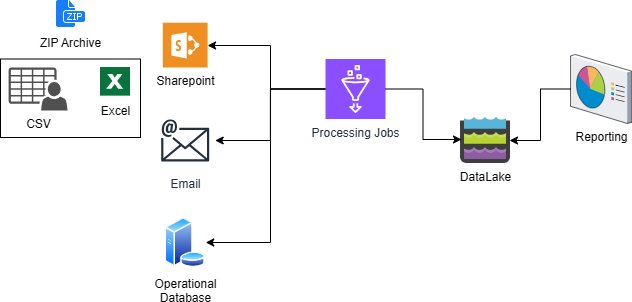
Edge computing helps to collect, process and transmit data on farms, helping with pest identification, safety traceability, unmanned agricultural machinery, intelligent farm management and more. In fact, here in Australia, Agriculture Victoria is conducting an on-farm IoT trial where a ‘Data Lake’ is used to combine storage, governance and analytics in a single platform. The potential for edge computing to provide real-time insights to farmers ‘in the Lake’ is massive!
For smart greenhouses, especially, edge computing can make a huge difference. These closed ecosystems can be put on autopilot to cut processing costs, reduce waste, automate environmental regulation and drive sustainability.
I actually went strawberry picking at a greenhouse in January, so it blows my mind that a humble pot of jam could be so cutting-edge
5. Health
This is where we get real.
Believe it or not, edge computing can actually save lives . When latency means the difference between life and death, rapid medical response is essential. Edge computing optimises data and provides accurate results in real-time, transmitting critical information to the frontline near instantly .
Edge computing not only assists in medical response, but also anticipates the need for medical intervention. Continuous Glucose Monitoring (CGM) for diabetics is an extraordinary example where a wearable sensor is inserted under the skin, and measures the level of glucose in the interstitial fluid. By processing data on the edge, CGM can alert users or carers if glucose levels change rapidly, thus intercepting a ‘hypo’ (or hypoglycaemia) before it even happens. My younger brother is diabetic, and I have to tell you – edge computing makes a real and meaningful impact on his life.
Another great example of edge computing in medical prevention is in sun safety. QUT Public Health researcher Dr Elke Hacker led a skin protection project using UV indicating wristbands. These wristbands change colour when sunscreen is required, and were given to children to raise awareness and remind them to use sun protection. Isn’t that amazing?