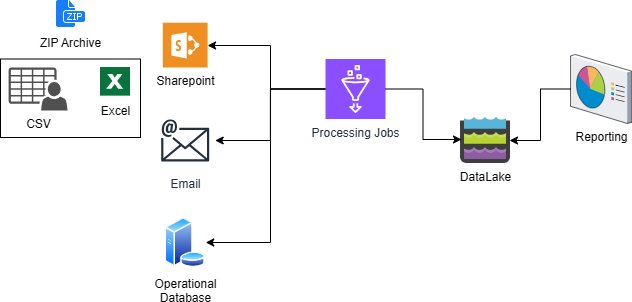
This session showed how large, complex organisations can translate policy priorities into real operational outcomes by modernising core systems, not just “doing a tech project”. Monash Health replaced multiple ageing HR and payroll systems with a single SAP SuccessFactors platform for 25,000 staff across 13 sites in under 12 months, underpinned by clear understanding of the existing architecture, strong executive sponsorship, and tight alignment with business problems (pay accuracy, speed, rostering, compliance). For your organisation, the message is that you need to treat major platforms as strategic infrastructure: know your current pain points, decide if your tech is still fit for purpose, and insist that any investment directly advances policy goals like workforce sustainability, safety and service quality.
Collaboration and shared capability across agencies can be as important as the technology itself. Monash used the transformation as a catalyst to form a statewide network of Victorian health services implementing the same platform, sharing lessons learned, design patterns and even bringing in vendors collectively via Teams channels and monthly forums. For your role, this means you should actively seek or build communities of practice around key systems, open up channels for real-time peer support, and think seriously about shared specialist teams and skills, rather than each agency competing for the same scarce resources and duplicating effort.
AI and automation are being positioned as practical tools to free up frontline staff time, not abstract future concepts. Monash is already seeing productivity gains from tools like Microsoft Copilot (drafting papers, minutes and decks) and is planning to use SAP’s AI assistant (Joule) across HR, rostering and finance so corporate services can remove low-value manual work and let clinicians focus on patient care. For your organisation, the implication is to treat AI as the next phase of your platform journey: start from specific use cases, embed AI capabilities into the systems you already use, measure the time you save, and reinvest that capacity into higher-impact work rather than seeing AI as an optional add-on or a separate experiment.

Introduction
Digital NSW 2025 marked the tenth anniversary of the state’s flagship digital showcase, a milestone that reflects a decade of commitment to modernising government services and strengthening the digital foundations of New South Wales. The Showcase has grown into a significant forum for public sector leaders, industry partners and technology experts to learn from each other and explore the next phase of transformation.
This year’s discussions reinforced a clear message. Digital transformation is not a destination. It is a continuous process that depends on strong foundations, responsible design and collaboration across government, industry and the community. While AI dominated the conversation, speakers consistently reminded us that progress relies just as much on accessibility, inclusion, cyber resilience, trust and modern systems as it does on any emerging technology.
Several themes were woven throughout the event. Accessibility remains central to digital government, ensuring that every person — regardless of age, ability, language or background — can participate fully and confidently. Cyber security was framed as both a leadership responsibility and an economic imperative, with the call for agencies to strengthen their preparedness, governance and incident response. Innovation and AI emerged as powerful enablers, but only when underpinned by reliable data, modern platforms and clear guardrails. And across all sessions, the importance of a future-ready workforce was unmistakable, highlighting the need for ongoing capability uplift and a culture of continual learning.
The event also showcased the structural steps New South Wales is taking to embed safe and effective use of AI. The newly established Office for AI, led by Dan Roelink, will guide agencies through standards, assurance and the updated AI Assessment Framework, helping ensure AI is adopted responsibly and in alignment with the NSW Digital Strategy. This sits alongside broader long-term work, such as the NSW Innovation Blueprint, which sets out a ten-year vision for an inclusive and resilient innovation ecosystem that can support growth, create new jobs and help address some of the state’s most pressing challenges.
Together, these initiatives signal a clear direction for the future: services that are more accessible, more secure, more inclusive and more sustainable, delivered on modern foundations that support the safe use of new technologies. The insights captured in this document reflect the collective expertise shared at the Showcase and offer practical guidance for public sector leaders as they shape the next phase of digital government in New South Wales.
Ministerial Keynote
The Hon. Jihad Dib MP, Minister for Customer Service and Digital Government; Minister for Emergency Services, and Minister for Youth Justice, NSW Government
NSW’s digital agenda is about inclusion, not just innovation. The Minister reinforced that the state’s digital strategy was co-designed with agencies, industry, academia and community, with accessibility and inclusion as core principles, not add-ons. For your organisation, this means digital services and procurement must be designed “for everyone, from the start” – accessibility, plain language, and support for diverse abilities and backgrounds are now baseline expectations, not nice-to-haves.
AI is already operational in government – with a clear push for safe, practical use. From bushfire and flood modelling to AI cameras for coastal safety, and new AI frameworks and guidelines (including for agentic AI), the Minister framed AI as a productivity enabler that should free people for higher-value, human work. For your role, this means you should be looking for targeted, real-world AI use cases in your area, while also understanding and applying the guardrails around ethics, transparency and inclusion so you can bring staff and communities along, rather than deepen fear or resistance.
Trust, cyber security and digital identity are now at the heart of service delivery. The Minister highlighted cyber as his biggest concern, emphasised whole-of-government uplift and support (including ID Support NSW), and announced Australia’s first digital birth certificate as a step towards secure digital identity. For your organisation, this means treating cyber and privacy as core to service design, preparing for a future where digital credentials replace “100 points of ID”, and recognising that public trust in government data handling is a strategic asset you must actively protect.
Agency Head Panel: We’ll be exploring how we Equip our employees with the skills to responsibly harness digital, driving a more productive and agile public service.
Moderator: Greg Wells, A/Secretary, Department of Customer Service
Chloe Read, Managing Director, TAFE NSW
Chris Hanger, Chief Operating Officer, Department of Climate Change, Energy, the Environment and Water
Elizabeth Mildwater, Secretary, Department of Creative Industries, Tourism, Hospitality and Sport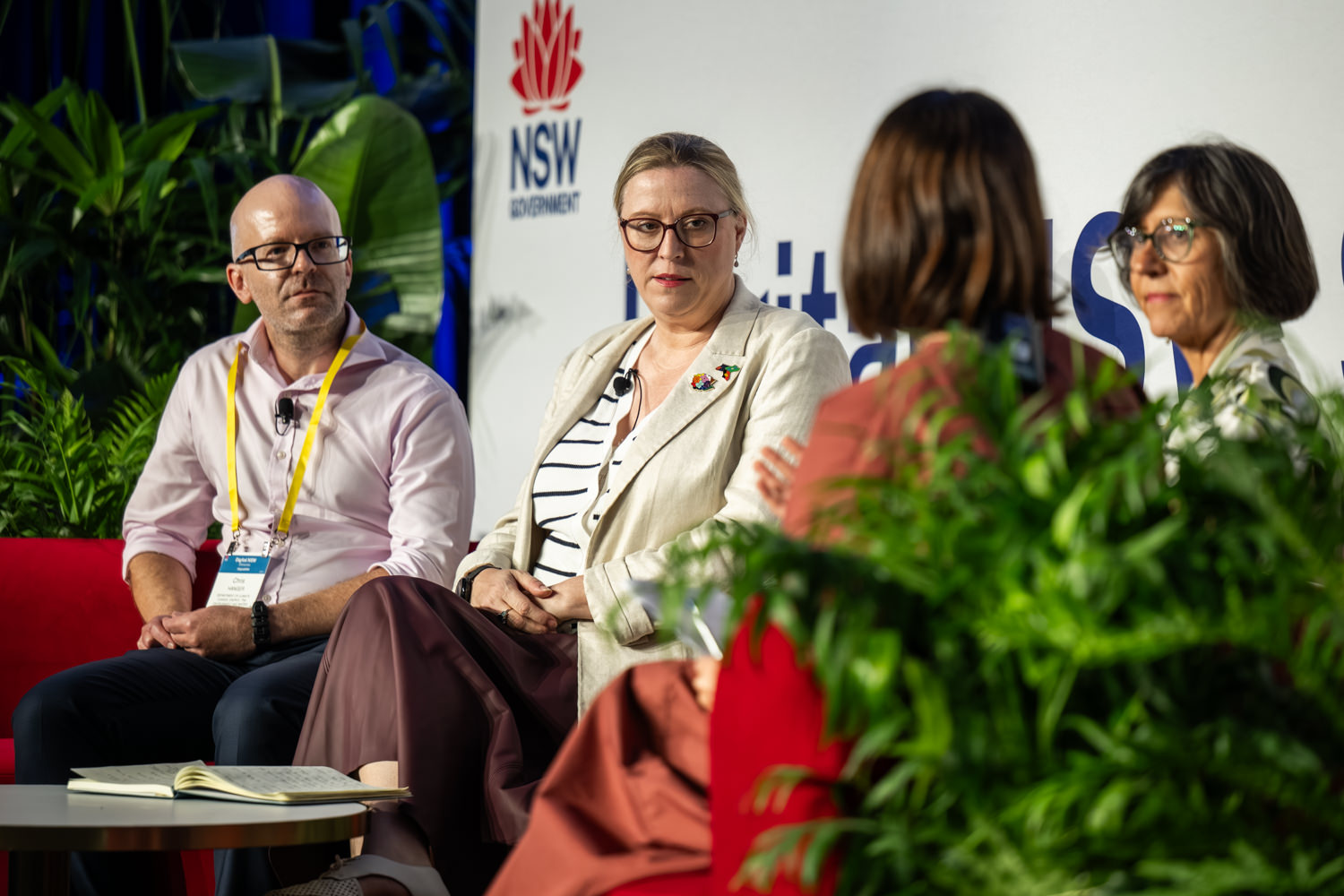
This session unpacked how to build AI and digital capability across the public sector workforce, with clear guardrails and a strong focus on inclusion. Speakers stressed that staff need practical guidance on “when to use AI and when not to”, supported by frameworks, micro-credentials (like the Institute of Applied Technology Digital) and executive-level upskilling, not just ad hoc experimentation. For your organisation, this means treating AI capability as a core skills program, making use of existing tools and free learning, and deliberately designing around the digital divide so people without devices or connectivity are not left further behind.
The panel explored how AI is reshaping sectors as different as creative industries, regulation and environment, and the need to protect what is uniquely human. In the arts, AI is challenging traditional notions of ownership and creativity, but the enduring value remains human intent, effort and connection, not just content generation. For your role, this means leaning into AI for insight, scale and smarter regulation (for example, using large data sets to detect harm in real time), while actively safeguarding intellectual property, rights and trust so technology augments rather than replaces human value.
A recurring theme was that responsible AI and digital are implementation challenges as much as technology ones, especially in a tight fiscal environment. Panellists emphasised embedding data, AI and environmental sustainability into the core of programs, funding bids and contracts, partnering with vendors who share government’s purpose, and avoiding vendor lock-in by using open patterns and shared platforms. For your organisation, this means you should stop treating digital as an add on, reuse solutions and lessons from other agencies and jurisdictions, negotiate for capability uplift as part of major deals, and design every new initiative so it is both AI ready and environmentally responsible from day one.
Turning policy priorities into outcomes through technology
Sherree O’Connell, Director Employee Services and Systems, Monash Health
Sussan Lam, Director, Architecture Advisory, Public Sector and Defense, SAP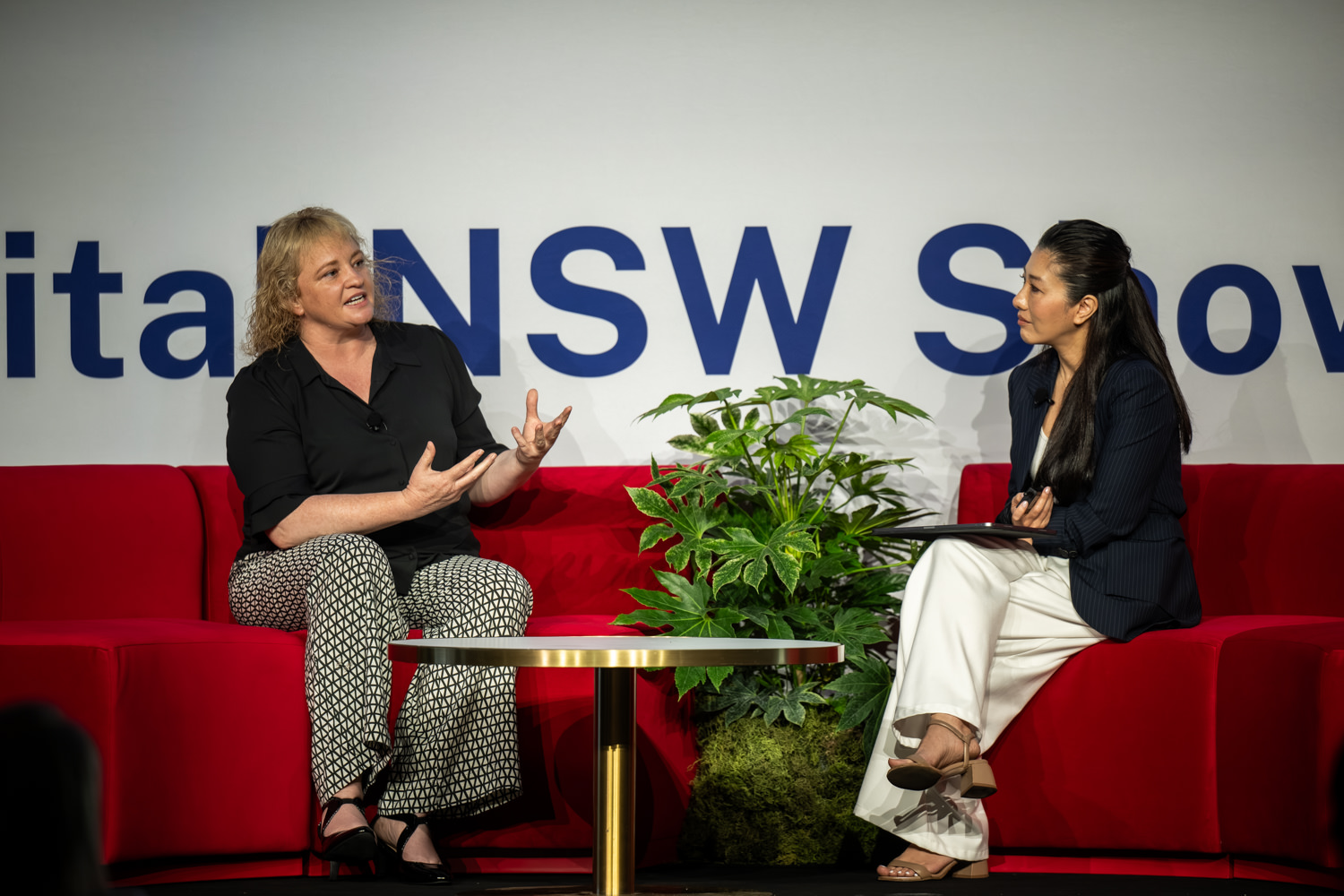
This session explored how AI is forcing a step change in digital capability, leadership and risk appetite across the public sector, not just “more tech projects”. Panellists stressed that leaders now need digital literacy as a core skill: understanding where AI can genuinely reshape policy and service delivery, how to experiment safely, and when to say no. For your organisation, this means building capability at all levels (executive, specialist, frontline), treating AI as a lever for outcomes rather than a buzzword, and creating space for controlled experimentation instead of defaulting to “too risky”.
Data stewardship and legacy systems are now make-or-break foundations for meaningful AI use. While interest in AI is helping to “unlock” long-standing conversations about data, the panel was clear that robust governance, interoperability, and tackling technical debt are prerequisites: you cannot scale safe, trusted AI on poor quality, siloed data. For your role, this means investing time in data quality, ownership and sharing arrangements, aligning to whole-of-government standards, and recognising that AI work and data work must run in parallel rather than treating AI as a shortcut.
Trust, governance and citizen experience will shape how far and how fast governments can move with AI. The APS AI Plan, NSW’s Office of AI and tools like the NSW AI Assessment Framework and GovAI sandbox are designed to signal that government wants safe experimentation, but under stronger guardrails given the legacy of incidents like robodebt and recent data breaches. For your organisation, this means designing AI use cases that improve front-end customer experience (for example zero-touch or low-friction services), being transparent about how AI is used, and assuming that maintaining social licence is as important as chasing efficiency or innovation.
Interstate Panel: Accelerating Digital and Data Capabilities Across Australia - 2026 Priorities for Advancement’.
Laura Christie, Deputy Secretary, Digital NSW, NSW Department of Customer Service
Lee Hickin, Executive Director, National AI Centre
Lucy Poole, Deputy CEO - Digital Strategy, Policy and Performance, Digital Transformation Agency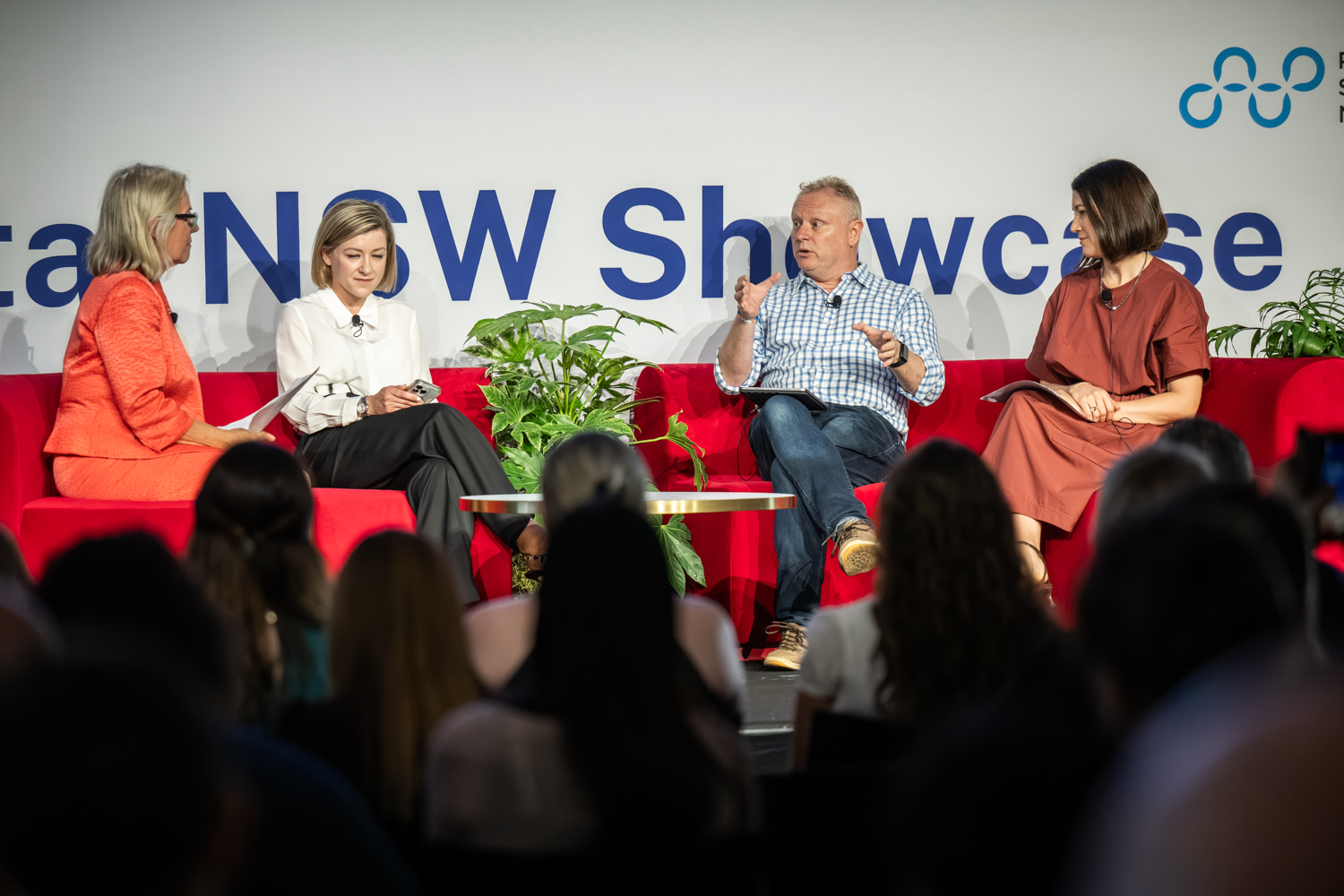
This panel explored how AI is reshaping expectations of leadership, capability and risk across government, not just the tech stack. The speakers framed AI as a whole-of-system shift that demands digital literacy at all levels, from introductory skills for all staff, to deep expertise for digital professionals, to senior leaders who can connect technology to policy and service outcomes. For your organisation, this means treating AI and digital as core leadership competencies, creating space for safe experimentation (not just waterfall projects) and being explicit about your risk appetite so teams know they are backed when they try new approaches.
Data stewardship and legacy systems were called out as the critical bottlenecks to scaling AI and digital. While AI is driving new urgency and interest in data, the panel was clear that poor quality, siloed and legacy constrained data will undermine any AI ambition. For your role, this means prioritising data governance, interoperability and technical debt reduction as strategic work, not back office housekeeping, and using the current “AI moment” to lift expectations on data ownership, standards and cross agency sharing.
Trust, social licence and customer experience will shape how far and how fast governments can move with AI. The discussion highlighted the fragile public trust context shaped by major data breaches and robodebt, and stressed the need for strong guardrails, transparency and clear frameworks such as AI assessment tools and sandboxes. For your organisation, this means designing AI use cases that genuinely improve front end citizen and business experience, being open about how and where AI is used, and ensuring governance and ethics are built into your initiatives from the start so innovation does not come at the cost of community confidence.
National threat briefing: Digital security for maximum impact
Lieutenant General Michelle McGuinness CSC, National Cyber Security Coordinator, Department of Home Affairs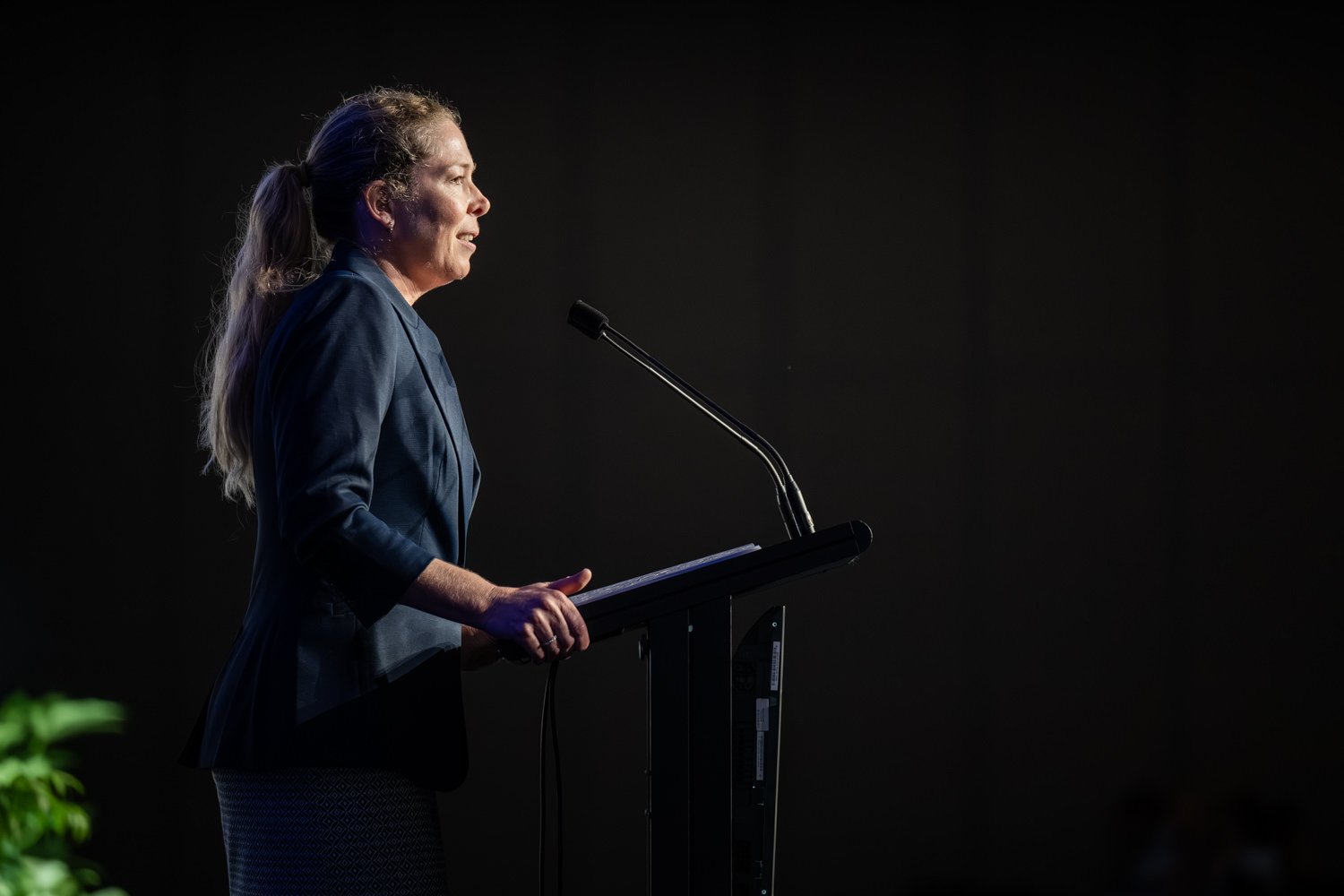
Cyber security was framed as a national, whole-of-society responsibility—not a technical function. Lieutenant General McGuinness emphasised that cyber is now fundamentally a leadership, culture and risk-management issue. Agencies hold some of the nation’s most sensitive citizen data, making government an attractive target and placing a premium on preparedness. For your organisation, this means embedding cyber thinking into every program, decision and team—not treating it as an IT add-on—and ensuring boards, executives and frontline staff see themselves as part of Australia’s cyber defence.
The threat environment is escalating rapidly, and resilience depends on preparation, rehearsal and relationships. A cyber incident is reported every six minutes, with state-sponsored actors increasingly targeting government systems and critical infrastructure. McGuinness highlighted that organisations who plan and practise incident response recover faster and with less harm. For your agency, the takeaway is clear: build, maintain and rehearse your incident response plan; understand your data, dependencies and suppliers; and form trusted partnerships before an attack, not after.
Australia’s cyber uplift is entering a new phase—moving from building foundations to embedding a national security culture. Horizon 1 of the national strategy has improved awareness, modernised protective security policy and strengthened partnerships. Horizon 2 will focus on operational maturity and scaling uplift across government, industry and communities. For your organisation, this means adopting simple, everyday cyber practices, promoting “human firewalls” alongside technical defences, and contributing to a broader cultural shift where cyber-safe behaviours become as normal as being road-safe or sun-smart.
The Agentic Government: Re-Imagining an Inclusive Future for Public Service
Louise Sauvage, National Coach, Wheelchair Track and Road, NSW Institute of Sport
Gisele Kapterian, Public Sector Strategy Lead, Salesforce
Pieter Haenebalcke, Lead, Account SE, Salesforce
This session imagined what “agentic government” could look like in practice, using AI agents to deliver proactive, personalised services built around people’s lived experience. Through Louise’s story as a wheelchair user, it showed how a single, trusted government interface could anticipate disruptions (like a flooded station), reroute travel, check lift status and notify station staff, as well as surface accessibility information that currently takes multiple phone calls and websites to piece together. For your organisation, this means designing services that start with real user journeys (including disability and language needs) and letting AI handle orchestration behind the scenes, so citizens are supported rather than forced to fight the system.
Agentic AI was framed as a shared whole-of-government layer that simplifies complex processes such as starting a business, not as a standalone gadget. The “business starter” scenario showed an AI agent drawing on policy rules and data across agencies to explain licences, inspections and steps, pre fill applications, track progress and provide tailored starter packs. For your role, this means thinking beyond channel specific bots and towards reusable AI agents that sit over common platforms, reuse data, and guide people end to end through life events like housing, transport, business creation or disaster recovery.
For public servants, agentic government changes the work: from manual processing in siloed systems to managing AI agents and focusing on empathy, judgement and trust. The vision is fewer “swivel chair” tasks and more time on complex cases, inclusion, governance and risk, with humans always in the loop directing and approving what agents do. For your organisation, this implies investing in secure platforms and AI guardrails, upskilling staff to work confidently with AI, and measuring success in terms of independence and ease for people like Louise, not just internal efficiency.
Practical next steps to delivering on 2026 priorities
Laura Christie, Deputy Secretary, Digital NSW, NSW Department of Customer Service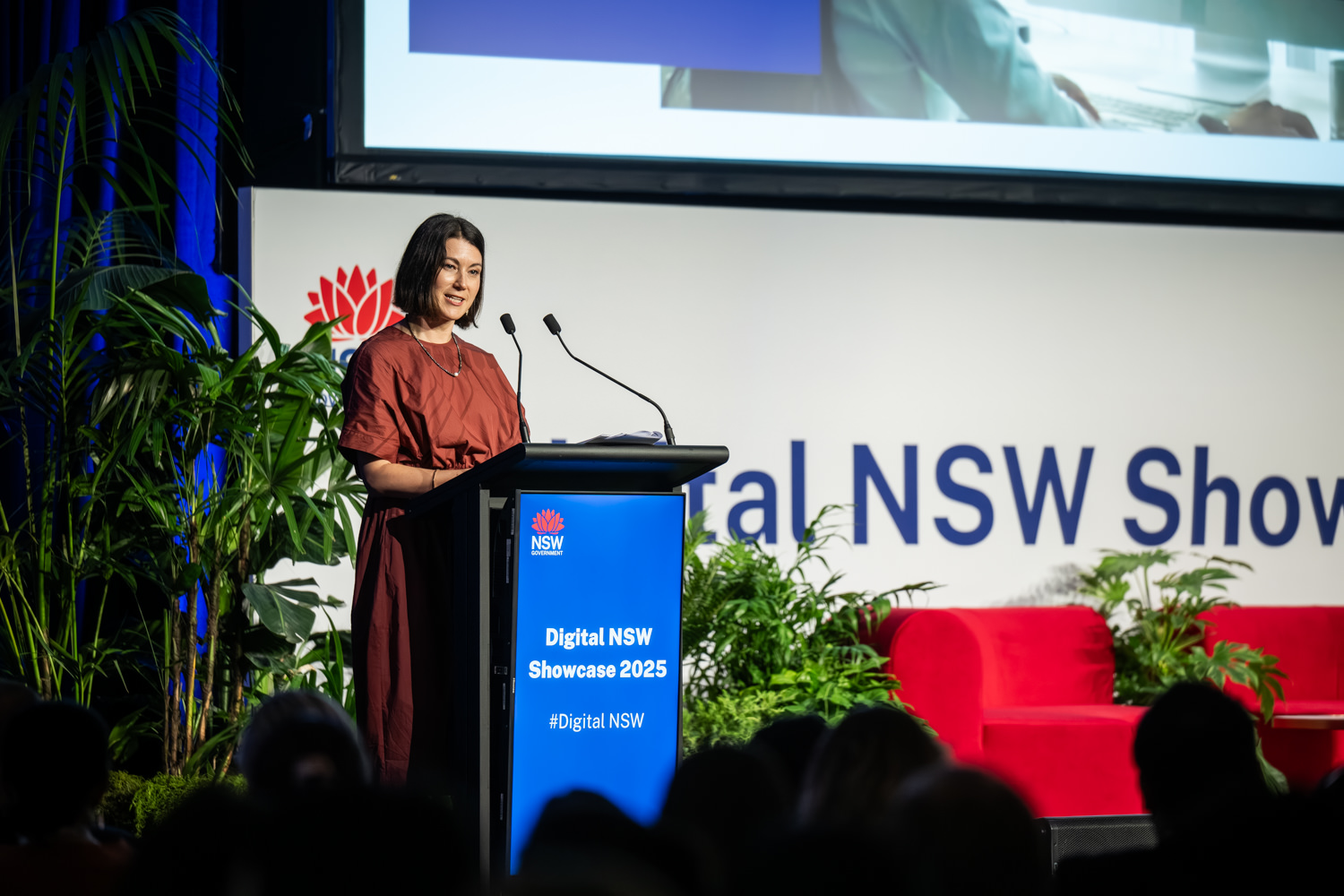
This session reinforced that NSW’s ability to deliver on its 2026 priorities depends on strong, shared digital foundations – not quick AI wins. Laura emphasised that without fixing legacy systems, unifying platforms, improving data governance and building accessible, consistent design patterns, AI will be “all icing and no cake.” For your organisation, this means prioritising interoperability, reuse and foundational uplift now, so AI can be deployed safely and at scale later.
Inclusion and accessibility are being treated as core infrastructure, not optional extras. The NSW Design System, nsw.gov.au consolidation, and new standards like Aboriginal design themes and the “quick exit” function show a shift toward services that work for everyone from the start. For your role, this means designing digital services around real-world barriers and user diversity, making inclusion-by-design a default expectation in every project.
Government is building the guardrails and capabilities needed to use AI responsibly while progressing major digital reforms. Through the Office of AI, the updated AI Assessment Framework, agentic AI guidance, and uplift programs in identity, cyber and digital skills, NSW is creating an environment where AI can be used safely, transparently and with public trust. For your organisation, the message is to engage with these frameworks early, upskill your teams and apply AI where it genuinely improves services—not just where it’s fashionable.
International keynote: Striking the balance between risk and tech innovation
David Shanks, Deputy Commissioner, Enterprise and Integrity Services, Inland Revenue NZ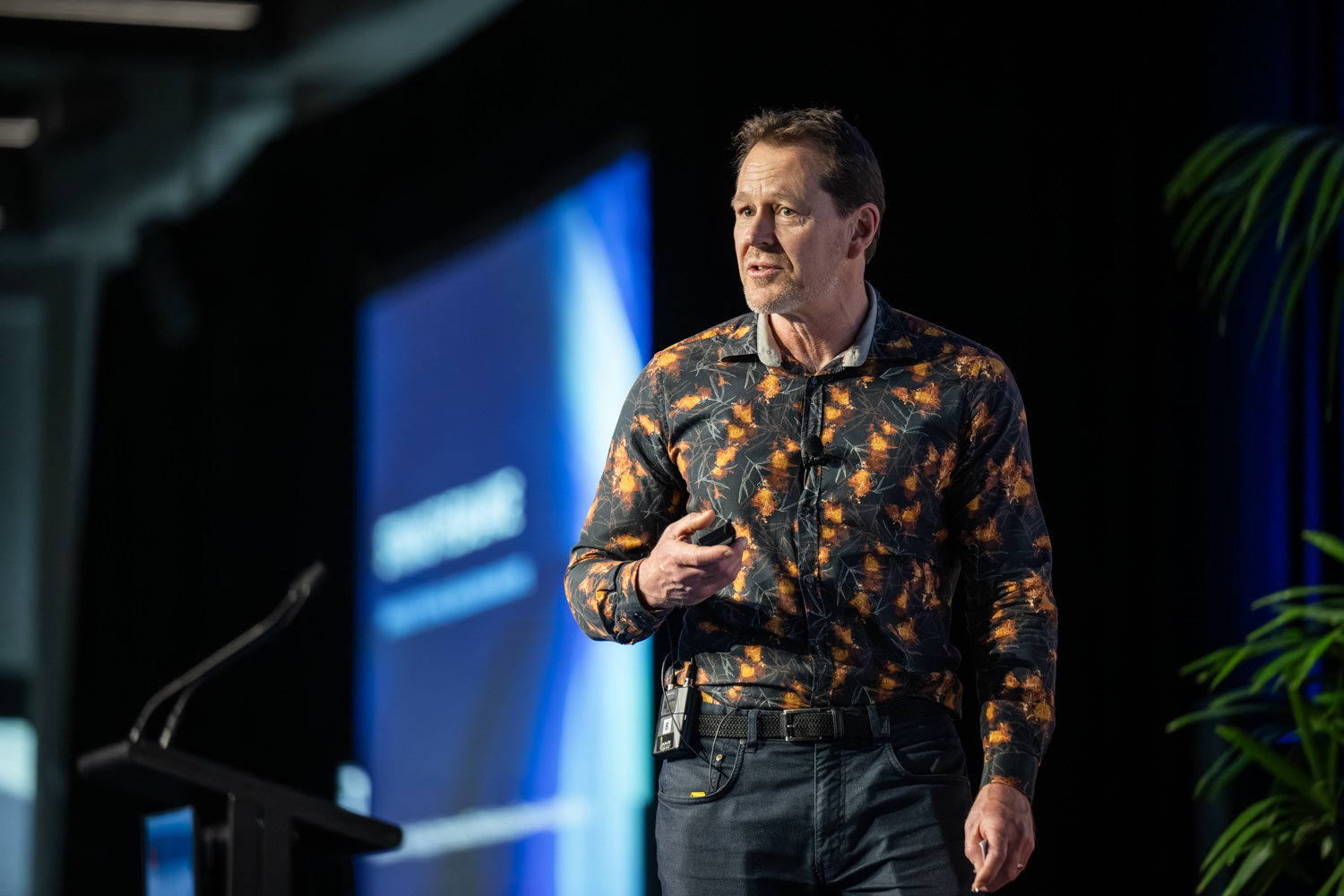
Balancing innovation and harm requires acknowledging both pathways — and preparing for both.
David challenged the idea that government is simply “too slow” to adopt AI, arguing the real task is managing the dual reality of opportunity and risk. Emerging technologies can deliver extraordinary public value, but they also amplify threats such as privacy breaches, social harms, and systemic vulnerabilities. For public sector leaders, this means resisting binary narratives and instead actively steering a middle path — one where innovation continues, but with thoughtful oversight anchored in public interest.Early signals matter — and frontline insight often reveals risks long before regulation can.
Whether it was content harms from early streaming platforms or the rise of AI companions among teenagers, David stressed the importance of paying attention to everyday indicators and lived experience. Regulatory frameworks will always lag technological change, but agencies can spot emerging risks early by listening to communities, especially young people, observing behavioural shifts, and building mechanisms to capture those weak signals. For organisations, this reinforces the need to stay close to your users and staff — not just your technology stack.Traditional regulation cannot keep pace — adaptive, collaborative models are essential.
Rapidly advancing AI, opaque systems and geopolitical drivers mean government cannot “step off the ride.” Instead, regulatory approaches must adapt. David’s experience with Netflix highlighted how solutions often lie within the technology ecosystem itself, and progress depends on collaboration, experimentation and willingness to rethink traditional regulatory processes. For leaders, the message is clear: build partnerships with industry, design flexible frameworks and prepare for iterative, ongoing adjustment rather than one-off regulatory fixes.
Concluding Call to Action
The 2025 Digital NSW Showcase reinforced that the future of government will be shaped not by technology alone, but by the choices leaders make about how it is applied, governed and shared. Across every session, a common message emerged: strong foundations, responsible innovation and genuine collaboration are essential if we are to deliver services that are accessible, trustworthy and built for the complexity of modern life.
As we move toward the 2026 priorities and beyond, public sector leaders have an opportunity to turn today’s insights into practical action. Lift digital capability across your teams, strengthen data quality and cyber resilience, embed accessibility in every design decision, and engage openly with industry, academia and communities. Above all, remain curious and proactive as AI and emerging technologies continue to evolve.
The task now is to translate momentum into measurable progress. By working together across agencies and sectors, NSW can continue to set the benchmark for inclusive, secure and future-ready digital government.





Help your peers
Share what you've learned with fellow public servants