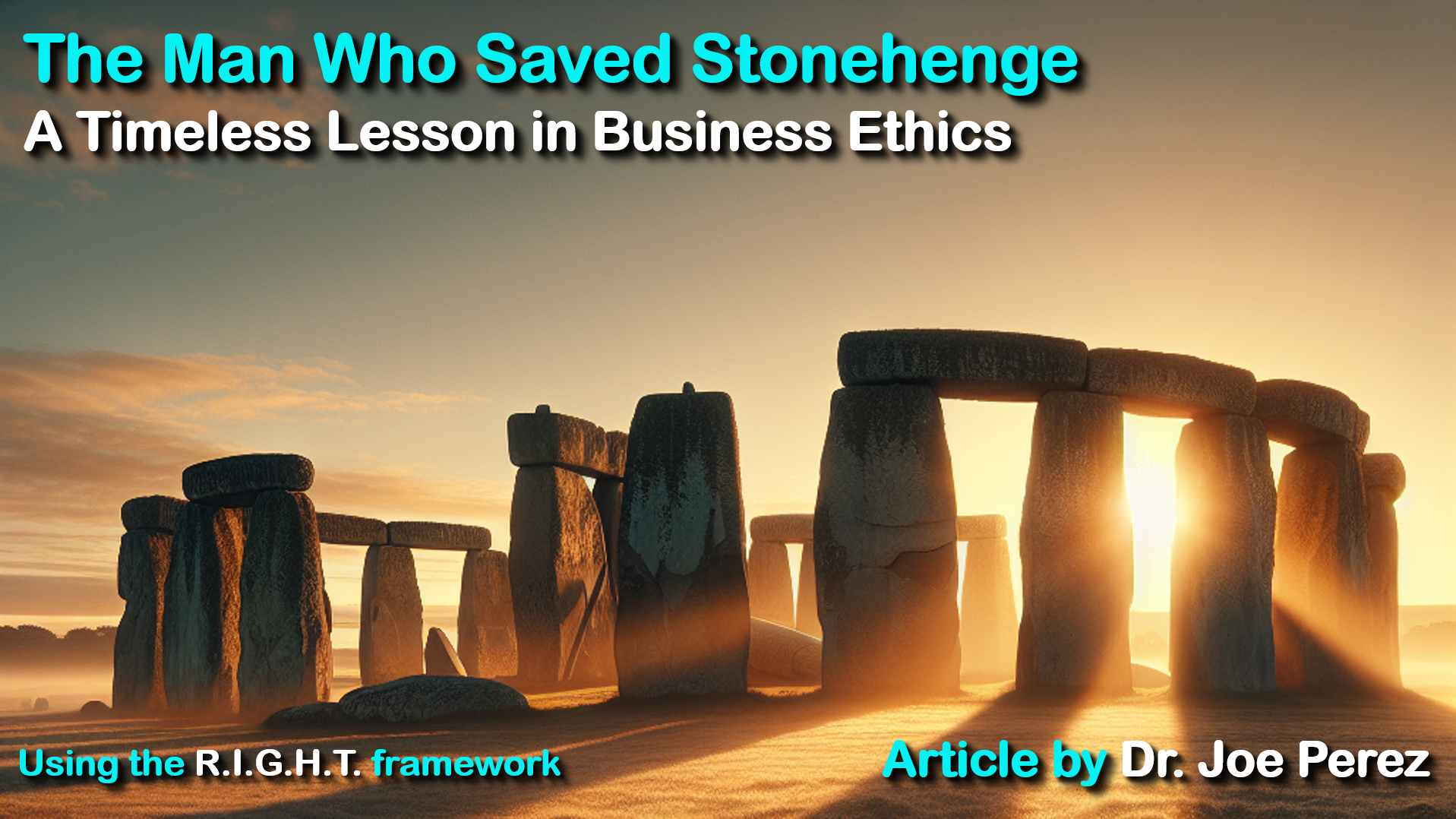
In September 1915, amidst the turmoil of World War I, an extraordinary act of conservation unfolded in the English countryside. Stonehenge, the prehistoric ring that had watched over Salisbury Plain for roughly 5,000 years, faced a surprising threat. The Antrobus family, grief-stricken after losing three heirs on Belgian battlefields, put their Wiltshire estate up for sale, and the monument was part of the listing.
At the New Theatre in Salisbury, a local barrister named Cecil Chubb showed up with a simple errand: buy dining chairs for his wife. He grew up the son of a saddler, and nothing about his early life suggested he would step into a national story. Yet he raised his hand, bid £6,600 (well over $1 million in today’s money), and walked out owning one of the world’s most iconic treasures.
There’s a twist. Chubb’s chief rival was a wealthy American known for buying historic structures, dismantling them, and shipping the pieces across the Atlantic. Imagine Stonehenge reassembled on private grounds. Chubb’s decision prevented that loss. Then, three years later, he gave the monument to the nation with a simple expectation: protect the site and keep it open to the public for generations.
This story still resonates because it captures the heart of ethical leadership. Chubb did more than weigh personal gain; he chose the public good. That same tension, between advantage and responsibility, meets us in boardrooms, council chambers, and agency offices every day.
What Are Business Ethics?
Business ethics are the values and standards that guide behavior at work, across both private enterprise and public service. They set the moral obligations leaders and teams accept: act fairly, keep your word, build trust with those who depend on you. This level of commitment goes far beyond simply complying with the law. Ethics live in the everyday choices where no regulations spell out the answer and no one is looking over your shoulder. They shape whether organizations operate openly, manage resources with care, and pay attention to society’s expectations.
This matters profoundly in government. Public organizations handle taxpayer money and deliver essential services. Citizens place their trust in public servants to act with prudence and fairness; that trust should never be taken for granted. The work touches schools, roads, hospitals, safety, and the environment. In other words, the stakes are personal.
Ethics aren’t lofty statements framed on a wall. They show up in how we treat people, the way we buy and build, and how we resolve conflicts. Ethical standards create cultures where honesty, accountability, and fairness become habits. In short, ethics keep commercial goals and public missions aligned with human dignity and community wellbeing.
Why Business Ethics Is Vital
The case for ethics is practical. Organizations, both private and public, run on trust. Without it, customers go elsewhere, employees disengage, and citizens lose faith. Once trust slips, recovery takes years. Some never get it back.
Ethics also create staying power. Companies that cut corners eventually pay for it through lawsuits, penalties, boycotts, and reputational loss. Agencies that lose credibility face investigations, public backlash, and barriers to delivering services. There’s a human cost too: low morale, churn, and a sense of futility. On the other hand, ethical organizations build loyalty and partnership. They’re easier to work with, easier to lead, and better equipped to serve. Chubb’s story shows what it looks like when a leader considers more than the next quarter or the next headline. He preserved something priceless.
Now let me share five essential principles of ethical conduct, the initials of which spell out how to do what is R.I.G.H.T.
 R = Responsibility to Stakeholders
Responsibility means acting in the best interests of those your decisions affect, be they employees, customers, suppliers, communities, the environment, or anything/anyone else. It asks leaders to zoom out and consider second-order effects, not just the immediate gain. Patagonia, the outdoor apparel maker, illustrates this posture. The outdoor apparel company commits 1% of its sales to environmental causes and builds products with sustainable materials. They’ve even urged consumers to buy only what they need and repair what they already own. Rather than being built with slogans, that credibility grew from consistent choices that matched values with action. People recognize it. They come back because the brand behaves like a partner rather than a vendor.
Responsibility also pays dividends inside the organization. Teams bring more energy when they see their employer is conscientious. Customers and vendors reciprocate with goodwill and grace during hard stretches. Responsibility becomes a flywheel for trust, and trust becomes a competitive advantage.
In public service, responsibility stretches further. Every resident who relies on clean water, timely permits, safe streets, and capable schools qualifies as a stakeholder. Accountability for public funds, careful stewardship of assets, and a commitment to fairness aren’t optional; they define the job. Consider emergency management. When storms, fires, floods, or other disasters strike, agencies coordinate resources, prioritize the most vulnerable, and communicate clearly. Those actions reflect responsibility in motion. When it’s done well, the community sees institutions that work. When it’s neglected, the damage lasts long after the waters recede or the flames are put out.
 I = Integrity in All Dealings
Integrity anchors ethical practice. It demands consistency between what we say and what we do, even when no one is watching. It invites leaders to keep their commitments and to be transparent when they stumble. CVS Health offers a memorable example. In 2014, the company chose to stop selling tobacco products, walking away from around $2 billion in annual revenue. That decision aligned with the company’s mission to support health, and management reframed the business toward expanded health services. The call came at a cost, but the move clarified their identity and built trust with patients, partners, and communities.
Integrity should be treated as a signal. It tells employees, customers, and collaborators what to expect. Over time, that predictability creates confidence. People know where you stand, and they plan accordingly. Although integrity doesn’t necessarily eliminate all criticism or conflict, it does give you a firm ground on which to stand when difficult conversations arise.
For government workers, integrity is the bedrock of public confidence. Citizens expect impartiality, honesty, and respect for the law, both in letter and spirit. That means:
- Saying no to favoritism and undue influence.
- Disclosing potential conflicts.
- Documenting decisions in a way that holds up to scrutiny.
Independent ethics bodies, ombudsman offices, and whistleblower protections all reinforce this norm. When integrity is present, public life feels durable. When it fades, cynicism rises and participation falls. Healthy democracies depend on officials who honor the trust that has been placed in them.
 G = Guardianship of Resources
Guardianship calls leaders to manage resources (money, materials, data, and talent) with care. The goal might begin with efficiency, but more importantly, it includes stewardship. Best Buy provides a tangible illustration. The company created a nation-wide electronics recycling program, making it easy for customers to dispose of old devices responsibly. With more than 2 billion pounds of electronics recycled, they’ve reduced waste and helped prevent harmful materials from entering landfills. Their program requires investment and logistics, but it also proves a point: a large retailer can influence consumer behavior and environmental outcomes when it takes guardianship seriously.
Guardianship builds resilience. Organizations that think ahead about resources are better able to weather disruptions such as supply chain shocks, technology shifts, and regulatory changes. They waste less, learn faster, and conserve what matters.
In government, guardianship is central to the public mandate. Budgets, infrastructure, natural lands, data systems, and the workforce belong to the people. Transparent procurement, strong internal controls, and life-cycle planning for assets demonstrate respect for that ownership. The same goes for personal data: collect only what’s necessary, protect it rigorously, and use it for its intended public purpose. Managing national parks and public lands illustrates this ethic. Agencies balance access and preservation so future generations experience the same beauty and heritage. If that balance is ignored, the damage shows up in decades, not weeks.
 H = Honesty in Communication
Honesty keeps relationships healthy. It means sharing information that is correct, clear, and timely. It also means admitting mistakes and being specific about what you’ll do to fix them. JetBlue offered a strong example of this principle after a 2007 operational failure stranded passengers during a snowstorm. The CEO apologized publicly and rolled out a Customer Bill of Rights that spelled out compensation for delays and cancellations. The company moved beyond vague assurances and set measurable expectations. Then they made efforts to meet those expectations.
That approach changes how people feel during difficult moments. Angry customers can become loyal advocates when they believe a company will tell the truth and make things right. The practice builds “muscle memory” inside the organization too. Teams learn to escalate problems early, rather than burying them, because they trust leadership to respond constructively.
In the public sector, honest communication is essential to effective governance. Residents deserve information they can use, especially during emergencies or major policy changes. That includes acknowledging uncertainty when it exists, explaining the reasoning behind decisions, and using channels that reach diverse audiences. Clear, candid updates reduce rumors and confusion. When officials level with people, compliance goes up and anxiety goes down. In short, trust grows as honesty grows.
 T = Thoughtful Decision-Making
Thoughtful decision-making weighs ethical implications alongside costs, timelines, and risk. It resists the temptation to chase short-term wins that undermine long-term health. Costco’s approach to pay and benefits illustrates the point. The company offers wages above industry norms and invests in employee development. That choice raises operating costs, but it also reduces turnover, improves service, and sustains profitability over time. The lesson is straightforward: decisions that honor people often produce superior results.
One might be tempted to say, “Thoughtful leadership means you move more slowly.” Nothing could be further from the truth. Thoughtful leadership is deliberate; it asks good questions, invites dissenting views, and considers who might be affected and how. It also measures outcomes so the organization can learn.
In government, thoughtful decision-making ensures policies and programs stand up over years, not months. Leaders weigh competing interests, seek community input, and use evidence to shape strategies. Consider urban infrastructure. Projects that include environmental assessments, community engagement, and realistic maintenance plans are more likely to succeed. The alternative—rushed approvals, weak analysis, and limited consultation—creates cost overruns and public frustration. Good governance favors durable solutions over quick fixes.
CONCLUSION
Cecil Chubb’s legacy still has lessons for us today. His impulse purchase protected a monument and, more importantly, ensured it would remain a public treasure. That’s a picture of ethics at work: a choice that looks beyond convenience and sees the people who will come after us.
When Chubb entered the Salisbury auction, he could have taken home the chairs and called it a day. Instead, he chose a path that turned a private decision into a public good. We face similar forks in the road all the time: budget cycles, policy debates, procurement choices, hiring decisions.
The principles of Responsibility, Integrity, Guardianship, Honesty, and Thoughtful decision-making guide the way. Doing the R.I.G.H.T. thing helps leaders build organizations that stand the test of time, much like Stonehenge itself. In the public sector, these same principles form the bedrock of good governance. And when officials and agencies follow them, they meet their mandates and strengthen the fabric of democracy. The Stonehenge story reminds us that today’s choices, whether in business or government, can echo across generations. Embracing responsibility, integrity, guardianship, honesty, and thoughtful decision-making will enable public servants to leave a legacy as enduring as those massive stones on Salisbury Plain.


Published by






Help your peers
Share what you've learned with fellow public servants