Episode Overview
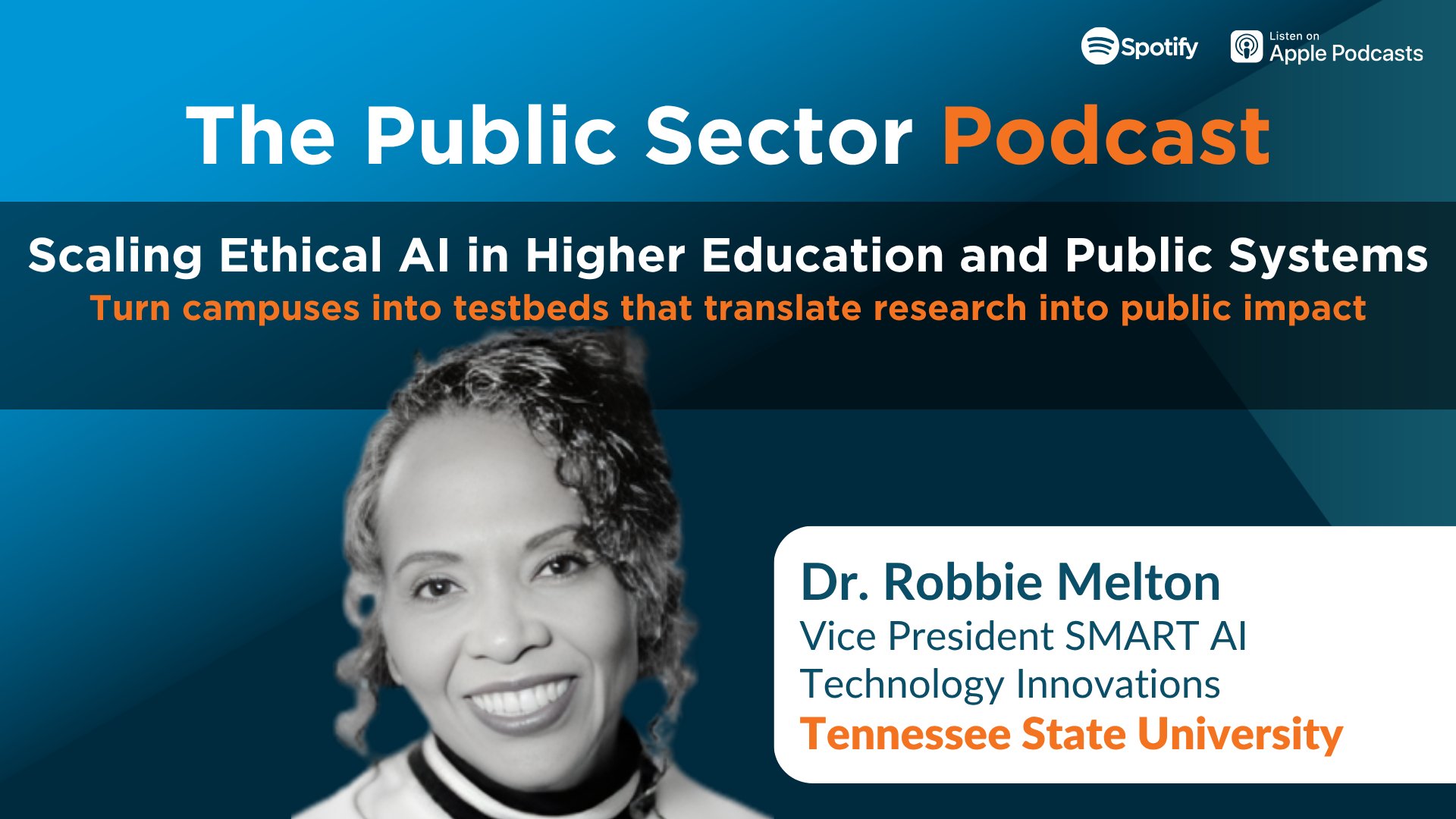
In this episode, educator and self-described “change agent” Dr. Robbie Melton (Vice President SMART AI Technology Innovations, Tennessee State University) delivers a high-energy, no-slides talk on why AI is already reshaping education and government. Using vivid examples from everyday devices and emerging wearables, Melton argues the real issue is not whether AI exists, but whether institutions are ready to use it safely, ethically, and effectively to improve learning and services.
From “smart nails” that can detect harmful substances, to health-monitoring wearables and AI-enabled translation and summarisation tools on smartphones, the episode reframes AI as practical, personal, and already in our hands. The central message is clear: stop treating AI as a threat, and start treating it as a tool to bridge gaps, personalise learning, and modernise how people learn and work.
Key Themes
The conversation focuses on AI as a transformational force that is already embedded in devices, services, and workflows, even if organisations have not caught up. Melton challenges the fear-based narrative around cheating and replacement, and instead highlights adaptation, personalisation, and human impact as the real opportunity.
A recurring theme is readiness: if technology is accelerating faster than education and government systems, then leaders must prioritise responsible adoption, safety, and skills so AI becomes an enabler, not a barrier.
What You’ll Learn
1) AI Is Already Here (and Already Wearable)
How AI is showing up in unexpected places, from smart nails and rings to watches, shoes, and glasses, and why that matters for public services and education.
2) Why the “Cheating” Debate Misses the Point
Why Melton believes AI exposes outdated assessment and teaching models, and why the system must evolve rather than trying to block the tools.
3) Smartphones as the Most Underused AI Platform
How translation, summarisation, and “scan and ask” workflows can be used immediately, and why most people are not using the power already in their pocket.
4) Personalised Learning at Speed
How AI can help adapt lessons to different learning levels, learning styles, and cultural contexts in seconds when used legally and ethically.
5) Wearables, Health, and Real-World Safety Use Cases
Examples of AI-enabled wearables for monitoring health indicators, supporting prevention, and improving safety across environments.
6) Safety, Security, and Effectiveness Still Matter
Why emerging tech needs scrutiny (including workplace safety considerations) and what responsible implementation should account for.
7) From Preschool to Workforce Readiness
Why Melton emphasises bridging skills early, building AI literacy from the start, and connecting education pathways to workforce needs.
Key Takeaways
- AI is not coming, it is already embedded in daily life and work
- The biggest risk is falling behind while the tools accelerate
- Personalisation can improve learning outcomes when used ethically
- “Cheating” is a signal to update teaching and assessment, not a reason to pause progress
- Responsible adoption requires focus on safety, security, and effectiveness
- AI literacy needs to start early and continue through workforce development
Why You Should Listen
This episode is for education leaders, public sector executives, digital teams, and workforce development professionals who want a fast, memorable perspective on AI adoption. It is equal parts wake-up call and rallying cry: the tools are already here, and the opportunity lies in using them responsibly to improve learning, services, and society.
Memorable Line of Thinking
AI should not be treated as a barrier. It is the tool that can help education and government finally adapt at the speed people need.





Help your peers
Share what you've learned with fellow public servants