Image generated by Microsoft Copilot
Remember that eerie paragraph from Steinbeck's "Of Mice and Men" where George describes their dream farm to Lennie? "We'll have a big vegetable patch and a rabbit hutch and chickens..." Well, those mice wouldn't have been interested in the cheese in George's pantry anyway. Here's something you might be surprised to know.
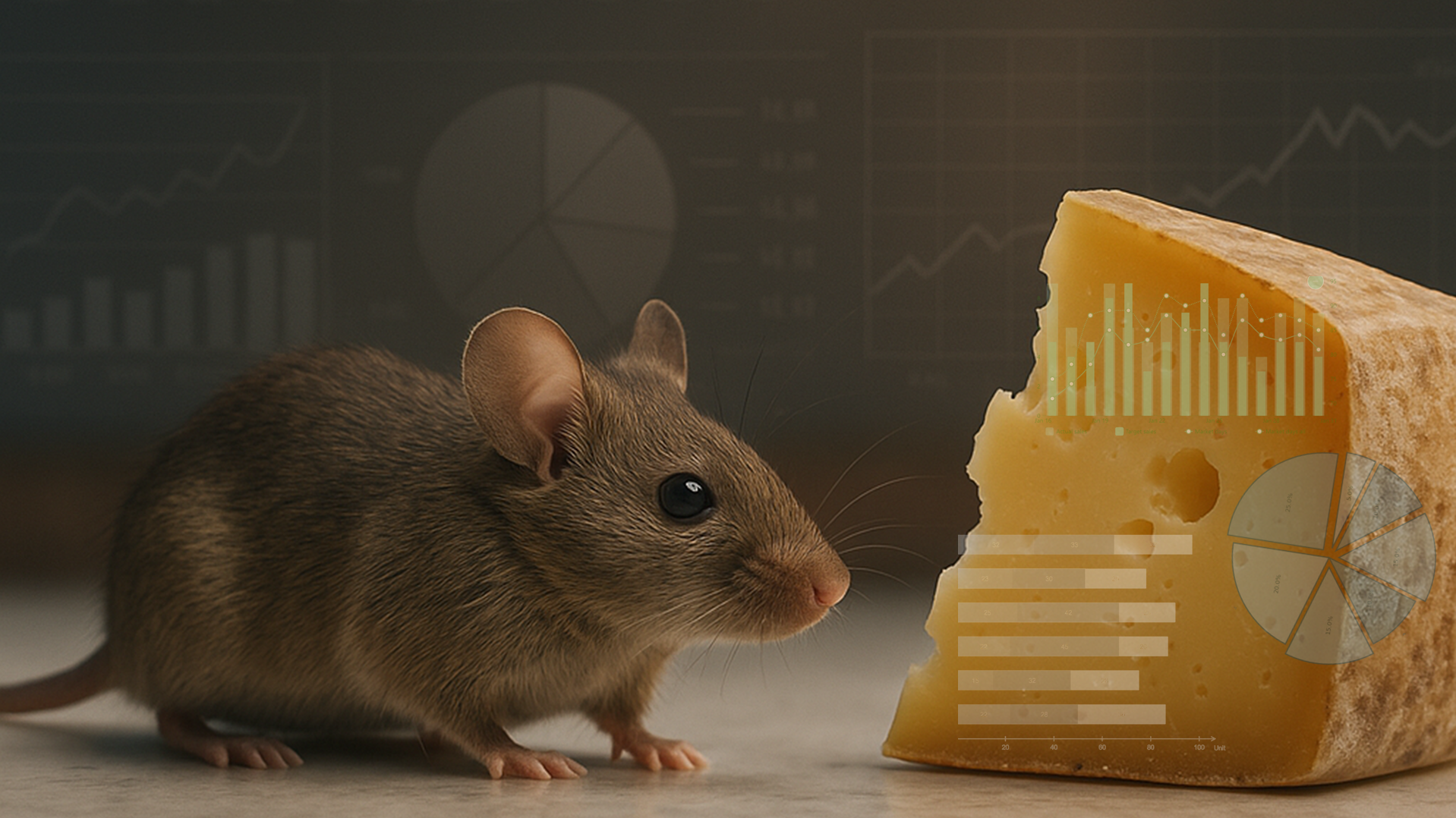
We've carried it down through generations that mice are cheese-loving creatures. This myth has been believed from ancient Rome's Seneca to Shakespeare's literary works, and all the way through Tom and Jerry cartoons. Here's what's true, though: mice actually prefer sugary treats and carbohydrates. They're more apt to pilfer from your cookie jar than your cheese drawer. Some extremely pungent cheeses repel them even, and soft cheeses are poisonous to these little critters that don't have a gag reflex.
This intriguing disconnect between reality and perception is reflected in what we usually see in data analytics. Just as we've collectively accepted this mouse-cheese mythology without questioning its validity, organizations frequently operate on assumptions that, when confronted by data, are proven wrong. This brings us to our first memorable principle of data storytelling:
Perception Perfection Needs Protection
When presenting data, we must challenge existing beliefs and protect against false assumptions that could skew our understanding.
Definition: Defending against perception bias demands a structured method for data analysis and reporting. Companies need to put in place robust validation practices to guarantee preconceived ideas do not impact the way data are gathered, processed, and analyzed. This means producing detailed records of assumptions, carrying out peer review practices, and constantly subjecting up-held convictions to new data analysis.
Demonstration: Consider how businesses often assume their customer demographics match their marketing targets without verifying the data. A retail chain might market to millennials, then find out when they carefully study the facts that their target market is actually Gen X entrepreneurs. Protecting against these impression biases through regular verification of data enables organizations to modify their plans based on facts rather than assumptions.
The origin of the mouse-cheese myth offers another valuable lesson. Before the invention of electric refrigerators, cheese was stored in cool, dark, ventilated spaces. Mice, searching for any available food, would nibble on exposed cheese, creating an incorrect correlation that became cemented in cultural consciousness; a vivid example of assumption becoming reality. This historical misinterpretation teaches us our second principle:
Context Creates Clarity
Without proper context, data can lead us down paths of misunderstanding, much like our ancestors misinterpreting mouse behavior.
Definition: Context in data storytelling is all about describing the necessary background, relevant time frames, and conditions of the environment that influence the interpretation of data. Without context, even correct data can lead to incorrect conclusions or mistaken decisions. This principle underscores the importance of showing data in its correct framework to ensure accurate understanding.
Demonstration: Regional institutions have found in economic development that matching their information to certain contextual functions enhances clarity and effectiveness in their strategies. To give an example, when analyzing cybersecurity threats, understanding the whole system architecture provides essential context for interpreting seemingly anomalous patterns of data. This utilization of context enables stakeholders to base decisions on a complete understanding of the situation.
Speaking of misinterpretation, here’s something you might find truly “cheesy.” According to a 2011 study, cheese ranks as the most frequently stolen food item globally, with 4% of world cheese production disappearing to theft. We're not talking about petty shoplifting. Criminal organizations have orchestrated sophisticated heists, including a 2024 incident where £300,000 of award-winning cheddar vanished when a fake wholesale buyer pulled off the greatest cheese caper in history. And not a single mouse was involved in the crime.
This brings us to our third principle:
Stories Stick Stronger than Statistics
Although the statistics themselves about cheese theft are interesting, the tale of the great cheddar heist is engaging and might cause one to remember the details more readily.
Definition: Context in data storytelling is a matter of providing the necessary background information, respective timeframes, and environmental conditions influencing data interpretation. A lack of context in data can lead to incorrect conclusions or ill-informed decisions, even when the most accurate data possible has been presented. This principle underscores the importance of portraying data within its own context for proper understanding.
Demonstration: Spotify's annual "Wrapped" campaign demonstrates this principle by transcribing users' listening history into personalized stories. Similarly, visualization projects like "US Gun Deaths" by Periscopic demonstrate how combining emotional narrative and statistics produces lasting impact. These practices combine raw information with “story” to produce shareable and memorable pieces of information.
The psychology of effective data storytelling mirrors the qualities that enabled works like "Of Mice and Men" to endure. In the same way that Steinbeck used powerful imagery and emotional connection to convey greater truths about human beings, data storytelling must speak to both reason and emotion if it is to stimulate understanding and engagement.
Here's our fourth principle:
Meaningful Messages Move Minds
When we combine data with narrative elements, we create connections that resonate with our audience on multiple levels.
Definition: Building meaningful connections demands an understanding of both the logical and emotional sides of presenting data. Studies by Mary Helen Immordino-Yang indicate that emotional connections play a significant role in forming memories and thought processes. This principle highlights the need for building messages that appeal to both the analytical and emotional parts of the brain.
Demonstration: Successful data presentations often utilize visual and verbal techniques that evoke emotional responses while presenting fact-based information. In the case of reporting environmental statistics, using statistics combined with stories of communities affected by them yields a more powerful and more remembered message. Such a dual approach ensures that the presentation not only educates, but also produces action.
The fin al lesson comes full circle. Just as Tom and Jerry perpetuated the “myth of the mouse-cheese” through entertaining but inaccurate cartoon storytelling, we must ensure our data stories are pointed towards truth rather than entertainment. As with George and Lennie's dream in "Of Mice and Men," our data stories should be inspirational, but remain grounded in facts.
This leads us to our final principle:
Truth Telling Takes Talent
Balancing engaging storytelling with factual accuracy requires skill, integrity, and commitment to honest representation.
Definition: The honest presentation of data requires more than technical accuracy; it demands the ability to communicate complex information clearly without oversimplifying or fabricating. This principle encompasses the skill to avoid common errors such as cherry-picking facts, manipulating scales, or drawing false conclusions. It requires a commitment to transparency and ethical information representation.
Demonstration: The consequences of misrepresented data can be severe, as seen in cases where cut-off baselines or skewed averages lead to poor decision-making. In the case of graduate salary figures, for example, the highlighting of averages in isolation can create unrealistic expectations in a university setting. Skilled data storytellers must balance the need for engaging presentation with unwavering commitment to accuracy and completeness.
CONCLUSION:
Finally, whether we're discussing mice, men, or metrics, the magic is in the telling. Mice may not want the cheese, but they've given us something to think about in terms of how we present and consume information. George and Lennie didn’t get their farm with its vegetable patch and rabbit hutch, but their story, like well-presented data, keeps illuminating human realities and the power of narrative.
Remember, in the world of data storytelling, as in Steinbeck's novella, it's not where you end up that matters most but how you tell the story along the way. Just make sure your tale is based on fact -- and not assumptions about cheese-loving mice.


Published by









Help your peers
Share what you've learned with fellow public servants